Mastering railroad photography isn’t about having the most expensive camera or reinventing the wheel. It’s about learning how to use your camera settings and photo composition skills to frame and capture the best shot.
Using these railroad photography tips, we’ll help you enhance your skills and start taking images you’re proud to share.
Safety First: A Note On Railroad Photography Safety
Before jumping into any specific railroad photography tips, we must stress the importance of safety. Anytime you’re around railroad tracks, safety must be a top priority. Aside from staying educated on railroad safety laws, there’s a single phrase that can help keep you safe along the tracks:
Always expect a train.
Train tragedies happen more often than most people realize. Hundreds of people are injured or killed by trespassing on railroad tracks each year. Don’t become one of the statistics! Always be alert, and never walk or stand on the tracks unless you have permission from railroad personnel to do so safely.
Setting Up Your Camera
Your camera’s settings can make or break the results of your photography. And, all good photos are dependent on one thing: good lighting.
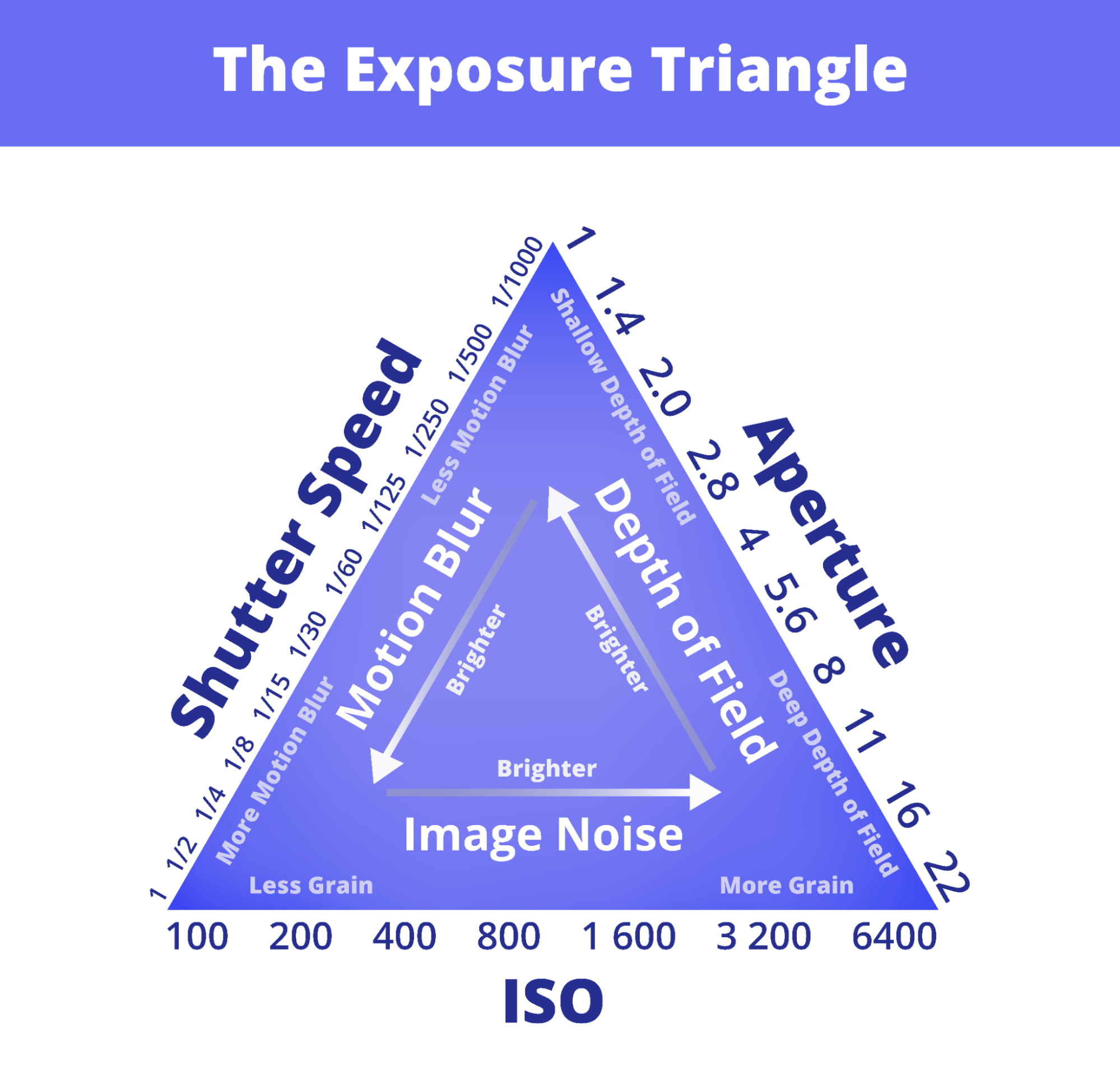
The exposure triangle is a photography concept used to describe the factors that help light your image. It’s made up of 3 elements: shutter speed, aperture, and ISO. They depend on each other, meaning a slight change in one camera setting can adjust the others to ensure the image is properly exposed.
Here’s a crash course in each camera setting:
Shutter Speed
The shutter speed controls how long the camera shutter stays open after pressing the button to capture your photo. It’s expressed in fractions of a second (i.e. 1/200, 1/500, etc.).
If you’re trying to shoot a moving subject, especially those traveling at a fast pace like trains, the shutter speed is your most important camera setting. The smaller the fraction, the faster the shutter speed, and the clearer the image will be.
Aperture
The aperture controls the size of the camera lens, and therefore, how much light comes through the frame. Think of it as your camera lens’ pupil. Just like our pupils shrink when exposed to more light, your camera’s aperture should, too, to keep your photos from being overexposed. In darker environments, you’ll want your aperture to be larger to let the most light enter the lens.
Aperture also impacts the depth of field, which relates to the sharpness of the subject in the foreground compared to the background. A shallow depth of field means that the subject is in focus, while the background is blurred, and it’s achieved with a large aperture. As the aperture gets smaller, the depth of the field becomes less blurry, and more of the background is visible.
ISO
The ISO controls how sensitive the camera is to light. It’s a useful tool that can help shoot well-lit photography in dark environments. However, it comes with some consequences. As the ISO increases, so does the image’s noise or grain.
Most photographers recommend keeping your ISO at its base setting or on the lower end, unless you’re unable to brighten the photo by adjusting the shutter speed or aperture. Since trains move fast, you may have to experiment with adjusting the ISO, since decreasing the shutter speed could cause the subject to become blurry.
Elements of Photo Composition
Taking great-looking photos of any kind depends on your ability to find the shot. While some photographers may have a natural eye for what looks and feels right, brushing up on some elements of photo composition can help with framing your shot.
There are 3 important compositions to learn to help “find your shot:”
1. Rule of Thirds
Imagine your frame is split into thirds horizontally and vertically, essentially creating 9 equal rectangles within the image. The rule of thirds principle suggests that our eyes are naturally drawn to the points of intersection, so your subject should be placed along these guiding lines.
Using the rule of thirds in railroad photography helps create balance and leads your eyes naturally throughout the frame.
2. Leading Lines
Similar to the rule of thirds, leading lines guide our eyes to the main subject or focal point of the shot using natural patterns, lines, or curves within the image.
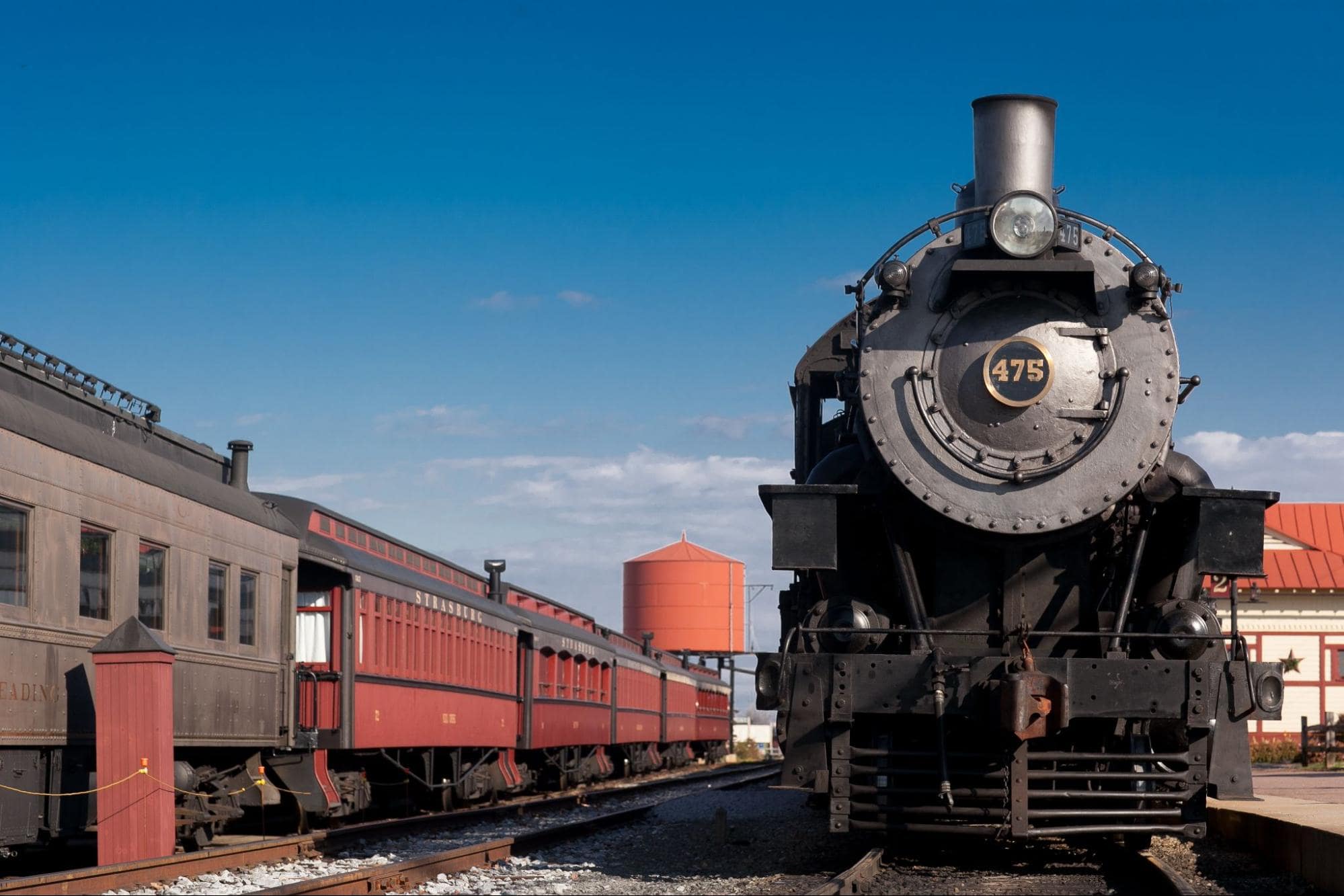
In the context of train photography, the tracks are the easiest visualization of leading lines. They effortlessly create movement, pushing our eyes forward to the first train in the fleet or some other focal point that’s ahead.
3. Perspective
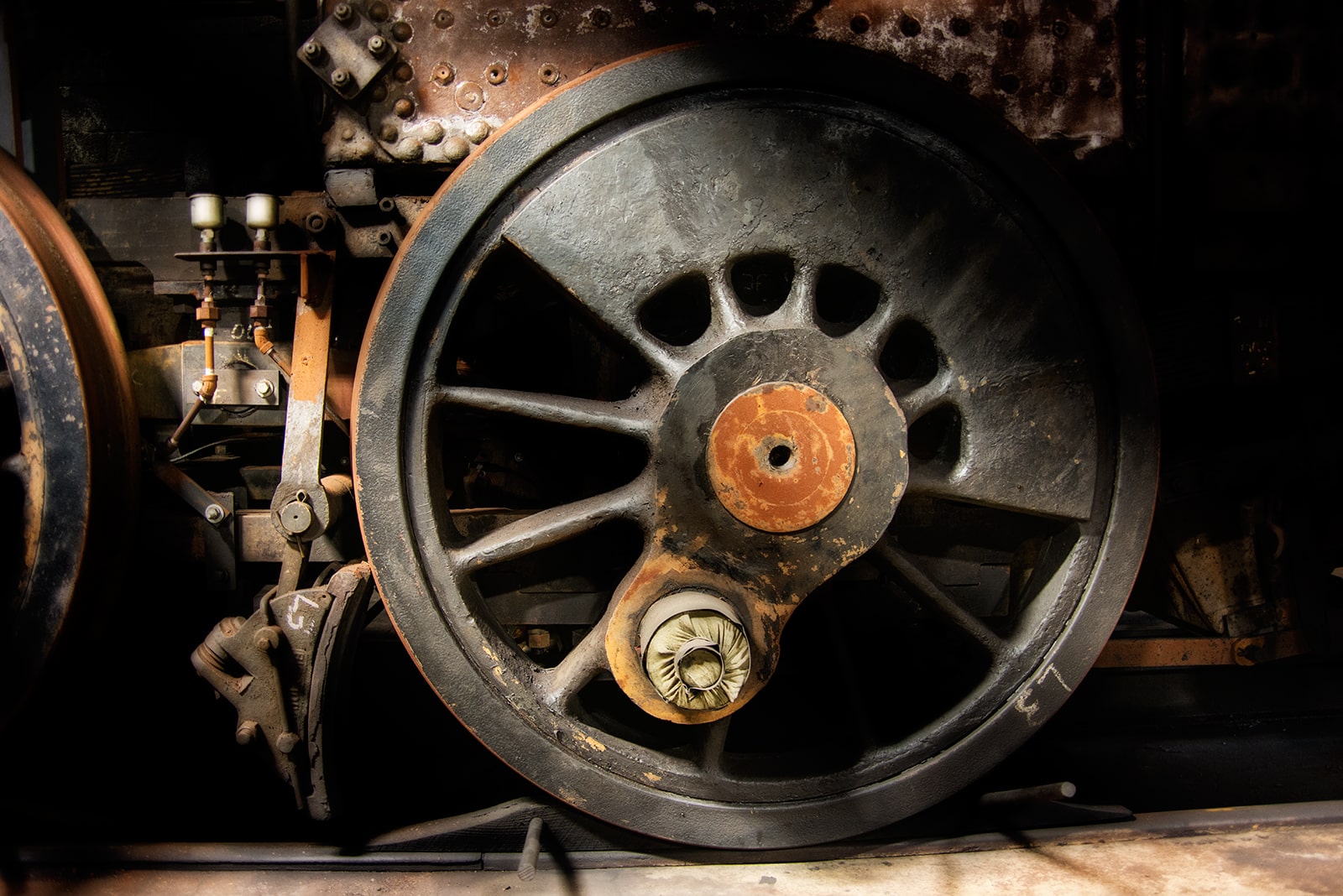
Perspective is the camera’s point of view. It’s achieved by experimenting with different camera angles. Generally, taking images from a lower point of view gives the subject power and magnitude, while shooting from a higher angle can help establish vulnerability or scale in comparison to its environment.
When capturing train photography, think about how the camera’s perspective can create visual interest or depth within the frame.
Finding A Location
The final step is to find a location to shoot your train photography. This will require some research on your end. Remember, most railroads are privately owned, so shooting from the tracks is considered trespassing (and dangerous).
You can, however, capture images of private trains from public locations like sidewalks, crosswalks, and station platforms. Just be sure to always stay at least 15 feet away from the tracks to keep a safe distance from any oncoming traffic.
If you’re interested in getting up close and personal with trains or railroad tracks, Strasburg Rail Road offers portrait sessions by request for photographers. Some limitations may still apply, but these experiences give our guests and photographers the ability to shoot some railroad photography with a unique perspective, but in a safe and controlled environment.
Give us a call or contact us via the production request form to ask about our photography opportunities!
Railroad Photography FAQs
Is it illegal to take pictures on a railroad track?
Yes, taking photos on railroad tracks is generally considered illegal. Most passenger railways are privately owned, so many states consider walking, taking photos, or shooting videos a criminal trespass.
All photos taken on railroad tracks require proper authorization. Written consent from the railroad company and city-issued permits are mandatory to ensure legal access during non-operating train times.
What camera settings should I use for taking railroad photography?
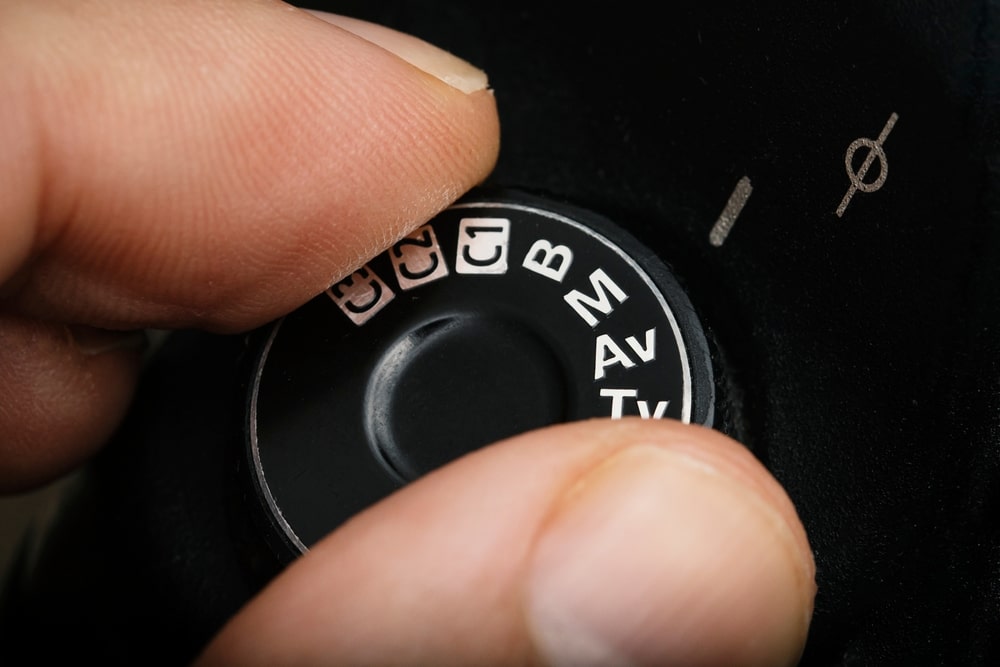
Trains move fast, so your camera’s shutter speed is the most important setting for capturing a moving train. If you’re uncomfortable shooting in manual mode, most DSLR cameras have a setting to prioritize the shutter speed.
For instance, on a Canon DSLR, the “TV” setting on the settings dial stands for “time value,” referring to the shutter speed. In this mode, you can manually adjust the shutter speed, and the camera will automatically adjust the aperture and ISO.
What are the best railroad track photography ideas?
Just like when you’re taking any picture, be sure to think about composition. Use the general frameworks, like the rule of thirds, depth of field, and perspective, to help frame your image.
Then, experiment with perspective. Think about the impact that shooting the train from a lower or higher point of view can have on the shot, or how much of the subject you want to take up the foreground or background.
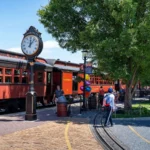
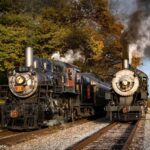
These unique perspectives will create the most interest and visual appeal in your photos. Here are a few ideas to help inspire your photography:
When is the best time of day to shoot railroad photography?
The best time to shoot railroad photography pictures is just before sunrise or sunset, when the light is soft and warm. Regardless of what time of day it is, the lighting is best when lit from behind. Shooting in the direction of the sun can create some gnarly shadows that are difficult to fix even in post-production.
Strasburg Rail Road provides a one-of-a-kind opportunity to book a safe photoshoot on our historic tracks. Over the years, we’ve hosted photography sessions for senior portraits, graduations, weddings, and more.
[button link=”https://www.strasburgrailroad.com/portrait-sessions/” palette_color=”red” is_target_blank=true label=”Book A Portrait Session Today” large=true ]