When you think about trains, you probably picture a classic locomotive. The roar of the engine, the call of the whistle, and the clickety-clack of wheels on the track.
But who do you picture as a conductor or an engineer?
You may think of famous train conductors like Tom Hanks’ character in “The Polar Express.” Or, you might imagine Sir Topham Hatt from the story world of “Thomas the Tank Engine®.” These characters have warmed their way into our hearts for decades.
Now, we’re going to peek behind the curtain of lesser-known figures in the history of trains—railroad women. We’ll explore the stories, facts, and history that make these female train conductors and engineers iconic.
The Rise of Female Train Conductors
In 1804, the invention of the steam locomotive changed everything. Trains jump-started the height of the Industrial Revolution. Moving people on passenger trains and goods on freight locomotives became fast, reliable, and efficient.
But women weren’t part of the typical picture. The railway system had a military-like structure designed for men. 19th-century society expected the “True Woman” to work as a homemaker.
Yet, the story didn’t end there. Railway women would forge a new path throughout the course of history.
History has Reshaped the Role of Woman Train Conductors
If the Industrial Revolution began the march of progress for locomotion, both World Wars lit a match. When men left to serve in the military and defend the free world, the role of wartime women in the workforce exploded.
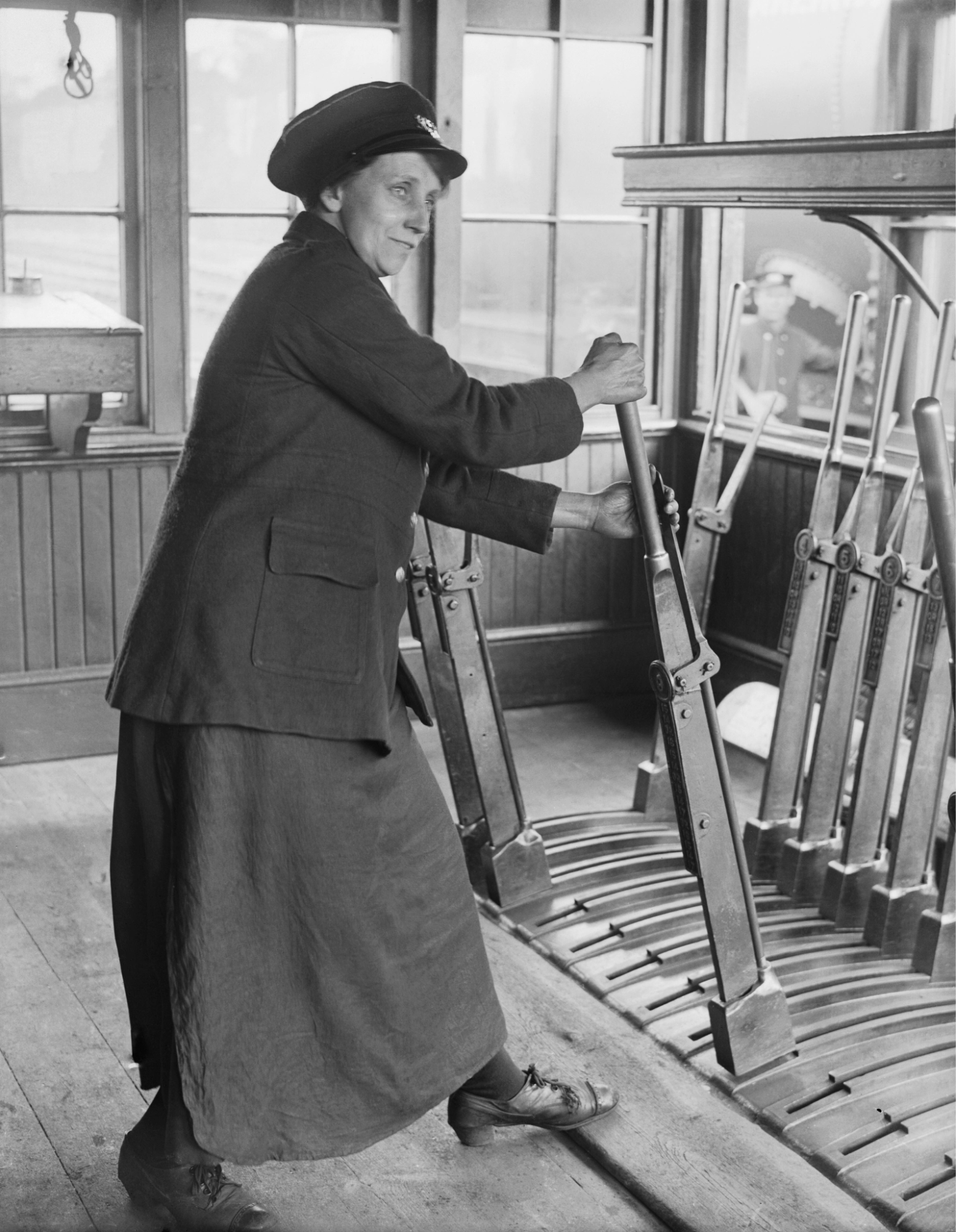
In World War I, British railroads recruited women as conductors on buses and trams. Passengers gave them the nickname “clippies.” Why? Because the conductors used ticket-clipping machines to collect fares.
During World War II, the availability of railway jobs for women surged to approximately 250,000 by the end of 1945. Some took on organizational and secretarial roles. Yet, many stepped into intense, physically demanding “men’s jobs” as conductors, brakemen, and switchmen. Historic photos show that women even worked as conductors on the Philadelphia Railroad.
After the war, the railroads assumed that the ladies would step down from their roles…
…but these visionary railroad women had a different idea.
The perception of what women could do in the workforce would never be the same.
The Story of Early Pioneers Who Changed Railway Culture
Christopher Columbus and Davy Crockett weren’t the only pioneers in American history. Many railway women have a seat in the hall of fame as influencers:
- Kate Shelley: Kate was a 15-year-old railroad hero in 1881. She made her mark on history, risking her life to crawl across a collapsed railroad bridge. Shelley successfully warned a passenger train about washed-out tracks and saved many lives.
- Mary Walton: In 1879, Mary invented technology to deflect factory smokestack emissions. Later, she developed methods to reduce noise pollution for the New York City Metropolitan Railroad.
- The Harvey Girls: Founded in the 1880s, the Fred Harvey Company founded the Harvey Girls. These outstanding young women brought the highest standard of service quality to train rides during the historic Wild West.
- Arcola Philpott: In 1944, Arcola became the first Black female train conductor—or streetcar conductor, in her case—hired by the Los Angeles Railway.
- Leona W. Jackson: In 1962, Leona became the first female railroad commissioner at the U.S. Interstate Commerce Commission.
Women working on the railroads accomplished far more than impacting the history of trains. They paved the way for the success of their gender in the workplace for years to come.
Who is the First Official Woman Railway Driver?
Can you imagine being the first? Neil Armstrong walked on the moon. Amelia Earhart flew across the Atlantic. And Christine Gonzalez…
Who?
Christine Gonzalez was a bold trailblazer in the railroad industry whom you might not know. In the 1970s, Gonzalez stepped up and became the first woman to work as an official locomotive engineer at the Santa Fe Railway.
The railroad was a part of her DNA. Her father worked as a train conductor and her mother was the Santa Fe trainmaster’s secretary. Gonzalez’s grandparents also had a profound influence on her career. Her grandmother was one of Fred Harvey’s employees, while her grandfather was a pullman conductor.
Gonzalez was a bold trailblazer whose career at the railroad spanned over 35 years. Stories like hers show that a love for the rails truly knows no gender.
The Trailblazers: Railway Jobs for Women in the 20th Century
Famous train conductors and engineers inspire a new generation of women to go after careers in STEM fields. Christina Gonzalez was only a courageous first step.
Let’s shine a spotlight on the railway women of the late 20th century who changed the game:
- Edwina Justus: Justus was the first Black woman to work as a locomotive engineer for the Union Pacific railroad in 1973. She began her career as a brakeman, earning her promotion to engineer after 14 years of dedicated work.
- Ramona Dockter: As a member of the North Dakota Railroad Hall of Fame, Dockter left her mark on the history of trains. She became the first female to work as an official locomotive engineer for the Burlington Northern Railroad in 1976.
- Annette Cannon: Cannon got her start as a switchman brakeman in 1979 and was promoted to engineer 30 years later. She was one of the first women in Arkansas to hold a position in train and engine service.
- Mavis W. Evans: In 1979, Evans shattered records as a female conductor for the Long Island Rail Road (LIRR). Evans participated in the first all-female-operated train in the history of LIRR.
Today, organizations like Railway Age magazine honor pioneers for their contributions to the railroad industry. In 2017, Railway Age founded the award to recognize and celebrate women leaders. And the international community of railway women is still growing.
Building a Community With the League of Railway Women Today
Today, women train conductors and engineers have built an unshakeable community. The League of Railway Women upholds the rights its members have achieved in the workforce.
Founded in 1997, the organization connects and cultivates women in rail. It promotes diversity and partners with railroad organizations like Union Pacific. The railroad’s goal is to double the representation of women in the workforce to 11% by 2030.
The League of Railway Women is also passionate about paying forward success and inclusivity. They work diligently to promote accessible train experiences for people with disabilities. In 2020, women still accounted for only 7.4% of U.S. residents employed on the railroads. There’s still much to accomplish to embrace a sense of community and build a more inclusive future.
Can you hear the whistle calling to a brighter future?
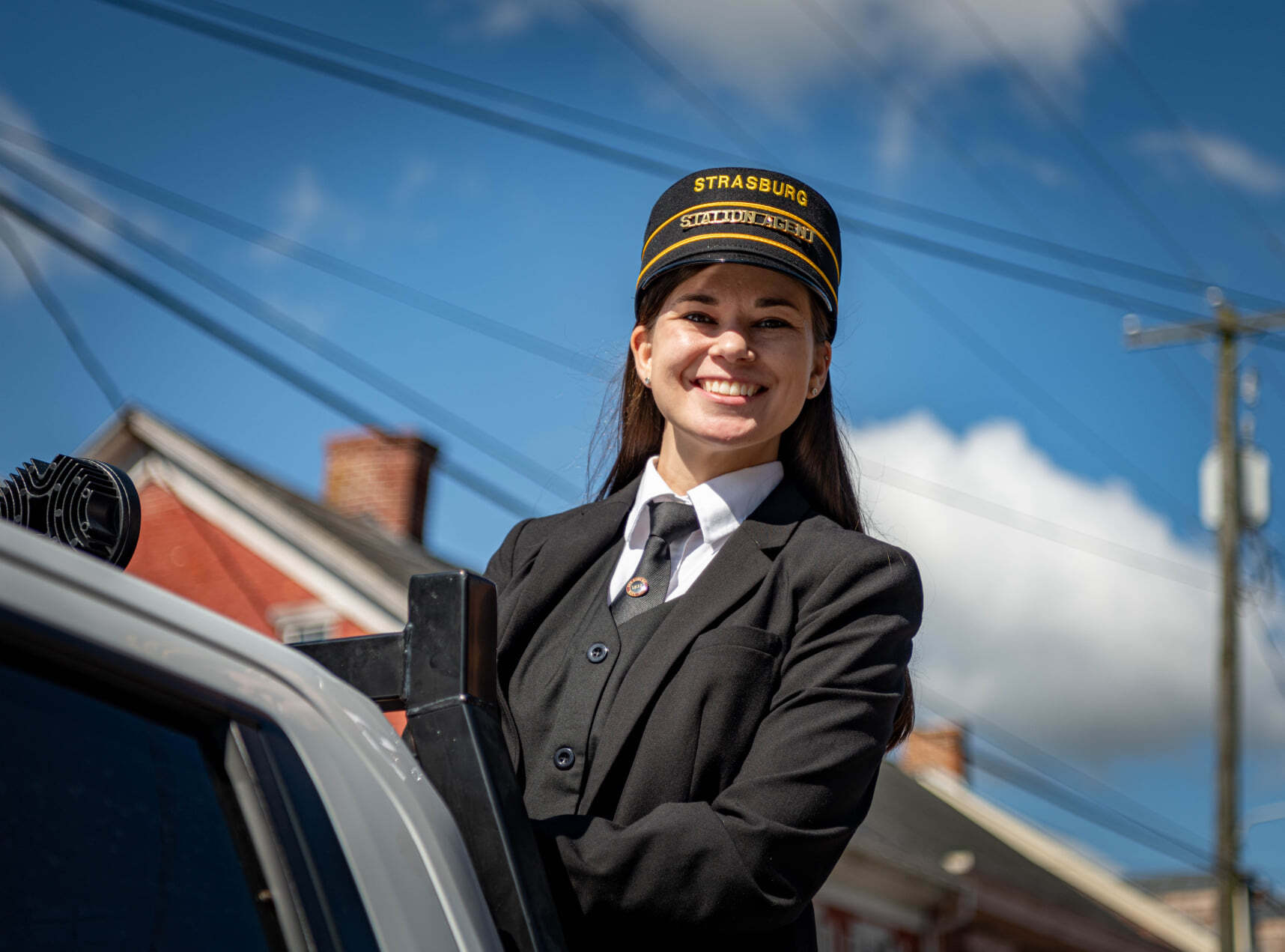
Strasburg Rail Road is proud that both its Stationmaster and Assistant Stationmaster are women — continuing to carry forward tradition while also breaking new ground in the industry.
Live the Legend of Railroad Women
The life of a train conductor is a never-ending journey for people of every gender, especially railroad women. The role is that of an adventurer, captain, and engineer all rolled into one.
Long hours and changing schedules can make it a challenge. But the reward of riding the rails is great. And the hurdles aren’t slowing these ladies down.
Do you dream of working on the railroads yourself? Whether you’re an aspiring conductor wondering about a career or an armchair train enthusiast, we have a place for you.
Step into the pages of history with one-of-a-kind theatrical shows and train experiences aboard a steam locomotive that’s over 190 years old at the Strasburg Rail Road. Get tickets today and live your modern-day train story with a classic twist!